I started paying attention to cabin air on a JFK-to-Stockholm red-eye about five years ago. Somewhere over the mid-Atlantic, I woke up with a throat so dry it felt like I’d been breathing through sandpaper. Eyes raw. Head thick. The kind of landing where you spend the first two hours of your trip just trying to feel normal.
That flight sent me down a rabbit hole. What I found changed how I pack for every trip since.
The number that changes how you think about flying
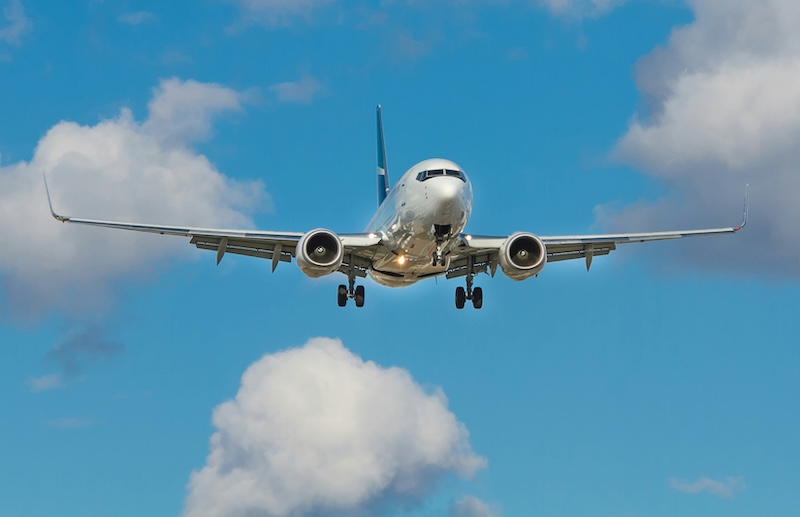
Airplane cabin humidity sits at roughly 4%.
To put that in perspective: the Sahara Desert, one of the driest places on Earth, averages about 25%. Your home probably hovers between 30% and 50%. A comfortable range for your airways is 40% to 60%.
At 4%, the cabin is drier than any natural environment you’d normally spend time in. And you’re sitting in it for 6, 10, sometimes 16 hours.
Your body responds immediately. With every exhale, you lose moisture into the cabin air. The clinical term is “insensible water loss,” and roughly half of it happens through respiration alone. On a 10-hour flight, the average person can lose close to two liters of water. You don’t sweat it out. You breathe it out.
The effects are familiar to anyone who flies regularly. Dry throat. Scratchy eyes. That heavy fatigue that hits before you even land. Your mucous membranes dry out, which makes them less effective at trapping airborne irritants. Sleep gets disrupted. You step off the plane feeling like you’ve been up for two days, even if you managed six hours of rest.
Drinking water helps. But it doesn’t solve the underlying problem. The moisture loss is happening at the airway level, faster than your stomach can replace it. You’d need to drink continuously, and even then, the water hits your bloodstream before it reaches your nasal passages and throat.
A humidifier mask for flying is designed to close that gap.
How a humidifying mask for flying actually works
The technology behind these masks isn’t new. Hospitals have used it in respiratory care for decades. It’s called Heat and Moisture Exchange, or HME, and it requires zero power.
When you exhale, the HME foam inside the mask captures warmth and moisture from your breath before it escapes into the cabin. When you inhale, fresh cabin air passes through that same foam, picking up the stored moisture on its way to your airways.
No water reservoir. No batteries. The mask uses your body’s own moisture cycle to keep your airways humidified, breath by breath.
This is worth understanding because the problem isn’t that you need to add moisture from an external source. The cabin is removing it faster than your body can cope. A humidifier mask doesn’t introduce anything new. It just stops the loss.
Fresh air flows in. Moisture stays where it belongs. That’s the entire principle.
Who actually needs a personal humidifier mask
If you fly once or twice a year for vacation, you’ll probably tough it out. The dryness is annoying. You recover in a day.
The calculation changes if you fly often.
Frequent flyers and business travelers feel the cumulative toll. It’s not one dry flight. It’s the third transatlantic crossing in six weeks. The back-to-back red-eyes. The meetings that start two hours after landing, when your brain is still catching up with your body. For these travelers, a humidifying face mask for plane travel isn’t about comfort. It’s about showing up functional.
Singers, voice actors, and vocal coaches have the most concrete professional stake. Vocal folds need humidity in the 40% to 60% range to function properly. Drop below that and the tissue dries out, swells, and loses flexibility. A single dry flight before a performance is a real risk. For anyone whose voice is their livelihood, a moisture mask for airplane travel is equipment, not an accessory.
Then there are the wellness-minded travelers who already think about how they arrive at a destination. They pick their seat carefully, pack compression socks, skip the airline food. A humidity mask fills the one gap all those other habits can’t address: the air itself.
And for people with asthma or sensitive airways, low humidity isn’t just uncomfortable. It irritates bronchial passages and can trigger flare-ups. A humidifying mask for flying keeps the incoming air at a more comfortable moisture level, which makes a real difference when the flight is eight hours or longer.
What to look for in a humidifier mask for flying
Not all masks in this space are equal. A few things separate the useful from the gimmicky.
The HME technology matters most. The foam should be engineered specifically for moisture exchange, not just general filtration. If a product mentions “moisture-wicking” without referencing HME, that’s marketing, not function.
Comfort for extended wear matters more than most people expect. You’ll have this on for hours. Straps that pull, pressure points around the ears, or a mask that shifts every time you adjust your head will guarantee you take it off by hour two.
Breathability is non-negotiable. The mask should condition the air, not restrict it. If breathing feels labored, the design is wrong. Good HME foam conditions air passively while you breathe normally.
And it should be simple. If a mask requires a water supply, a charging cable, or a carrying case the size of a toiletry bag, it’s overengineered for the problem it’s trying to solve. The best humidifying face mask for plane travel packs flat, weighs almost nothing, and works the moment you put it on.
Why Kuvola is the mask frequent travelers keep recommending
I’ve tried a few products in this category. Most land in one of two camps: medical-looking devices that belong in a hospital, or cheap fabric masks with vague “moisture” claims and nothing resembling real HME technology.
Kuvola sits in a different space entirely.
It’s a Swedish-designed humidifier mask built specifically for air travel. Manufactured to medical-grade standards in the UK, with genuine HME technology at the core. The mask captures moisture from your exhaled breath and returns it to the fresh air you inhale. No water, no batteries, nothing to plug in.
What stood out after testing it on multiple long-haul flights:
The design doesn’t look medical. Kuvola was developed with Propeller Design in Stockholm, a Red Dot award-winning studio, and it shows. The mask is minimal, charcoal-colored, and comes with a travel pouch and carabiner clip. It packs flat. Nobody looks at you and thinks “respiratory patient.”
The fit holds up over long flights. I wore it through an 11-hour flight without feeling the need to take it off. No strap fatigue, no pressure points, no constant readjusting.
And the result was obvious. By landing, my throat wasn’t raw. My eyes weren’t burning. I felt closer to normal than I’d felt after any comparable flight in years. It doesn’t erase every symptom of long-haul travel, but the airway dryness was gone, and that’s the thing that compounds everything else.
Pricing is reasonable for the use case: $89 for the mask, $12 for a replacement HME foam, $19 for a two-pack. Free shipping. Kuvola offers a 30-day money-back guarantee, so there’s no risk in trying it.
For singers and voice professionals specifically: this addresses the humidity gap that puts your instrument at risk every time you fly. If you’re traveling before a performance, a recording session, or a tour, it’s a practical safeguard worth having in your bag.
Kuvola Discount Code
Here’s a code to get a 10% discount on Kuvola. Code: TryKuvola10
Frequently asked questions
Is a humidifier mask the same as an air filter?
No. Filters remove particles from the air. A humidifier mask adds moisture back. Kuvola’s HME foam captures moisture from your exhaled breath and returns it to the fresh air on your next inhale. Different technology, different purpose.
Can I breathe normally with a humidifying mask on?
Yes. HME foam conditions air without restricting it. Breathing should feel natural. If a mask makes you feel like you’re working harder, that’s a design flaw, not something inherent to the technology.
How long does the HME foam last?
Kuvola’s HME foam is designed for a single flight. For longer journeys or multi-leg trips, bring a replacement. They’re small enough to forget they’re there.
Does a humidity mask help with asthma on flights?
Dry air can irritate sensitive airways and trigger symptoms. A humidifier mask keeps the air you breathe at a higher moisture level, which may reduce irritation. It’s not a medical treatment, but many travelers with airway sensitivity find it makes longer flights significantly more manageable.
Is this the same as wearing a regular face mask on a plane?
No. A standard cloth or surgical mask doesn’t have HME technology and won’t capture or return moisture. You need a mask with dedicated HME foam for actual humidification.
How do I combat dry air on a plane?
Drinking water helps with general hydration, but it doesn’t address airway moisture loss directly. A personal humidifier mask is the most effective way to keep your airways humidified during flight. Pairing it with staying hydrated and avoiding alcohol gives you the best result.
Where can I buy a humidifier mask for flying?
Kuvola ships internationally with free shipping. The mask is $89 with a 100-day money-back guarantee.
